
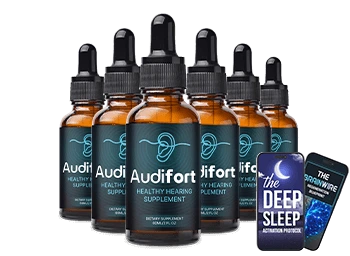
New once-daily formula highlights maca root, grape seed extract, green tea, capsicum annuum, Gymnema sylvestre and GABA among its twenty-two-ingredient proprietary blend, delivered as a sublingual liquid drop, with an ingredient-by-ingredient research overview
SAN DIEGO, Calif., Sept. 20, 2026 — Audifort today announced the U.S. launch of its multi-ingredient daily liquid drop supplement formulated to support hearing and auditory wellness in adults. The once-daily sublingual liquid formula combines botanical adaptogens, antioxidant extracts, amino acid-derived compounds and a natural neurotransmitter in a proprietary liquid blend, designed to be placed under the tongue or dissolved in water or juice. It is designed for adults who want a daily supplement that fits into an established routine of balanced nutrition, physical activity and regular healthcare.
The formula delivers 200 mg per serving of a twenty-two-ingredient proprietary blend, alongside chromium (as chromium picolinate). Six ingredients are prominently featured on the product page: maca root, grape seed extract, green tea, capsicum annuum, Gymnema sylvestre and GABA (gamma-aminobutyric acid). The complete list of all twenty-two ingredients is disclosed on the product’s Supplement Facts label, and consumers are encouraged to review the full label before use. The recommended serving is one full dropper (approximately 15 drops, or 1 ml) daily, placed under the tongue or dissolved in water or juice. Audifort is manufactured in the United States in a GMP-certified, FDA-registered facility. The formula is plant-based, non-GMO and stimulant-free.
Alongside the launch, Audifort is publishing an ingredient overview that summarizes published research on each of the six prominently featured components. The overview also explains where that research stops and what it does not establish about the finished product.
“Hearing and auditory wellness supplements are often sold on bold promises built from loosely connected studies,” said Chris Paulus, Media Relations Manager at Audifort. “We took the opposite approach. Audifort is a straightforward daily formula, and we’re telling consumers exactly what’s in it, what the science on each ingredient actually shows, and where the evidence is still limited.”
A Multi-Ingredient Formula for Daily Hearing and Auditory Wellness
Audifort’s formula draws from three ingredient categories associated with different aspects of normal physiological function relevant to auditory health:
- Circulation and antioxidant support: Grape seed extract and green tea contribute polyphenolic and catechin compounds studied in the context of antioxidant protection and normal microvascular circulation — both recognized as relevant to normal inner ear tissue health.
- Botanical adaptogens and metabolic support: Maca root, capsicum annuum and Gymnema sylvestre contribute bioactive compounds with documented traditional use histories and research profiles in the context of normal energy metabolism, circulatory function and normal inflammatory balance.
- Neural calming support: GABA (gamma-aminobutyric acid) is the brain’s principal inhibitory neurotransmitter and has been studied in the context of auditory cortex activity and relaxation, including in research examining tinnitus-associated neural signaling.
The combination reflects the company’s view that auditory wellness involves multiple interconnected systems — including inner ear microcirculation, antioxidant protection of hair cells, normal inflammatory balance and neural signaling — rather than a single pathway. Audifort emphasizes that this is a formulation rationale, not a clinical finding. The finished product has not been evaluated as a complete formula in published clinical trials.
A Note on the Proprietary Blend Structure
The Audifort formula contains twenty-two active ingredients in a combined proprietary blend totaling 200 mg per serving, alongside chromium picolinate. Because proprietary blends disclose ingredients by weight from highest to lowest without revealing individual amounts, the exact dosage of any single compound cannot be determined from the label alone.
This structure has an important research implication: published studies on the individually featured ingredients have typically used doses ranging from several hundred milligrams to several grams of a single compound. With twenty-two ingredients sharing 200 mg, it is unlikely that any single ingredient reaches the doses used in most published research simultaneously. Audifort’s research overview addresses the scientific context for each prominently featured ingredient based on available literature, and does not imply that any component is present at a dose equivalent to those studied in referenced research. Consumers are encouraged to review the full Supplement Facts panel and consult a qualified healthcare professional with any questions about ingredient amounts.
Maca Root: Research on Adaptogenic Activity and Circulatory Support
Maca (Lepidium meyenii) is a root vegetable native to the Peruvian Andes, classified as an adaptogen — a compound studied for its potential to support the body’s normal stress response and energy metabolism. Its bioactive compounds include glucosinolates and macamides, which have been studied for their relationship to normal energy, stamina, mood and hormonal balance in adults.
Research on maca root has examined its relationship to normal energy and stamina in a small number of randomized controlled trials, with some studies observing associations with self-reported energy and mood markers. Its relevance to auditory wellness in the Audifort formula is linked to its recognized research profile as a circulatory and adaptive wellness botanical, rather than direct evidence for hearing-specific outcomes. These studies had important limits — specific maca preparations, defined populations, short durations — and their findings do not establish outcomes from the finished Audifort formula. Its inclusion reflects maca’s recognized adaptogenic research profile, not a product-specific clinical claim.
Grape Seed Extract: Research on Antioxidant Activity and Microvascular Function
Grape seed extract (Vitis vinifera) is standardized to contain oligomeric proanthocyanidins (OPCs) — a class of polyphenolic compounds with potent antioxidant properties. OPCs have been studied for their relationship to antioxidant protection of vascular endothelial tissue and normal microvascular function, properties recognized as relevant to normal inner ear blood supply.
Research on grape seed extract has examined its antioxidant capacity and relationship to normal microvascular tone in several clinical studies. A systematic review noted associations between grape seed extract supplementation and improvements in antioxidant markers and normal circulatory function in adult participants. These studies had important limits — specific standardized OPC preparations, defined populations, variable doses — and their findings describe how OPCs interact with vascular and antioxidant markers in controlled conditions, not outcomes from the finished Audifort formula. Its inclusion reflects the recognized antioxidant and microvascular research profile of grape seed OPCs, not a product-specific clinical claim.
Green Tea: Research on Antioxidant Activity and Circulatory Wellness
Green tea (Camellia sinensis) leaf extract is standardized to contain catechins — particularly epigallocatechin gallate (EGCG) — along with naturally occurring caffeine. These compounds have been extensively studied in the context of antioxidant activity, normal microvascular circulation and normal inflammatory balance.
A meta-analysis published in the International Journal of Obesity observed associations between green tea catechin supplementation and improvements in antioxidant markers and normal circulatory function in adult participants. Its relevance to auditory wellness in the Audifort formula is linked to its recognized antioxidant and microcirculatory research profile rather than direct hearing-specific evidence. These studies had important limits and do not establish outcomes from the finished Audifort formula. Consumers who are sensitive to caffeine should note that green tea extract naturally contains caffeine, and should consider their total daily caffeine intake from all sources.
Capsicum Annuum: Research on Circulatory Function and Normal Inflammatory Balance
Capsicum annuum is a species of pepper plant whose active compound, capsaicin, has been extensively studied for its relationship to normal circulatory function, normal inflammatory balance and counterirritant activity in topical and oral research contexts. In oral supplementation, capsaicin’s vasodilatory properties have been studied in the context of normal peripheral and microvascular circulation.
Research has examined capsaicin supplementation in the context of normal circulation and normal inflammatory signaling. Its inclusion in the Audifort formula reflects the recognized research profile of capsaicin compounds in the context of normal circulatory and inflammatory function, rather than direct evidence for auditory outcomes from the finished formula. These findings do not establish outcomes from the Audifort formula, which contains capsicum annuum alongside twenty-one other ingredients.
Gymnema Sylvestre: Research on Glucose Metabolism and Neural Support
Gymnema sylvestre is a woody climbing plant used in traditional Ayurvedic medicine, primarily in the context of normal glucose metabolism. Its bioactive compounds — gymnemic acids — have been studied for their relationship to normal insulin sensitivity and glucose uptake. Research has also begun examining gymnemic acid compounds in the context of neural support, given the recognized relationship between normal glucose metabolism and normal auditory nerve function.
A number of small clinical studies have examined Gymnema sylvestre in adults with elevated blood glucose and observed associations with normal blood glucose markers. These studies used specific Gymnema preparations in defined populations with diagnosed metabolic conditions, and their findings do not establish outcomes from the Audifort formula. Individuals taking medication for blood glucose management should consult a qualified healthcare professional before use. Its inclusion reflects Gymnema sylvestre’s recognized research profile in the context of normal glucose and metabolic function, not a product-specific clinical claim.
GABA: Research on Neural Calming and Auditory Cortex Activity
GABA (gamma-aminobutyric acid) is the principal inhibitory neurotransmitter in the central nervous system, responsible for reducing neuronal excitability throughout the brain. Research has examined depleted GABA activity in the auditory cortex in the context of tinnitus — a condition characterized by perceived ringing or buzzing in the ears in the absence of external sound — with neuroimaging studies observing associations between reduced GABA inhibition and aberrant auditory cortex signaling.
A study published in Current Biology and related neuroimaging research have examined the role of GABAergic signaling in auditory cortex activity in individuals with tinnitus. A separate body of research has examined oral GABA supplementation in the context of relaxation and normal stress response in healthy adults. An important limit of GABA supplementation research is that the extent to which orally consumed GABA crosses the blood-brain barrier remains a subject of ongoing scientific discussion; however, sublingual administration — as used in Audifort — is recognized in some research as potentially offering more direct absorption than standard oral capsule delivery.
These studies had important limits — specific populations, defined conditions, variable doses — and their findings describe how GABAergic activity relates to auditory cortex signaling in research settings, not outcomes from the finished Audifort formula. Its inclusion reflects the recognized neurological research interest in GABA’s relationship to auditory cortex function and relaxation, not a product-specific clinical claim.

What Ingredient Research Does and Does Not Show
Audifort’s research overview separates three questions: what each ingredient is, what researchers have studied about it, and what has been demonstrated about the finished formula. Those questions have different answers.
The studies referenced here examined individual ingredients at specific doses, in specific populations and over specific periods. Audifort combines twenty-two ingredients in a 200 mg proprietary blend per daily serving, and the amounts, preparations and interactions within that formula differ substantially from the conditions of any individual study. For that reason, Audifort does not describe its formula as clinically proven and does not attribute ingredient-level research results to the finished product.
“We think consumers respond better to honesty than hype,” said Chris Paulus. “Every ingredient in Audifort has a recognized nutritional role or an active research profile. What we won’t do is stretch a study beyond what it found.”
Safety and Suitability
Audifort is intended for healthy adults. Individuals who are taking prescription medication — particularly those for blood glucose management, blood pressure or anticoagulation — should consult a qualified healthcare professional before use. This is particularly relevant given that Gymnema sylvestre has been associated with potential interactions with glucose-lowering medications, and that green tea extract naturally contains caffeine.
Individuals with tinnitus or hearing loss should consult a qualified audiologist or healthcare professional, as these conditions can have multiple underlying causes that may require clinical evaluation and treatment. Audifort is a dietary supplement and is not a substitute for professional hearing assessment or treatment.
The same consultation applies to individuals who are pregnant, nursing, managing a medical condition, scheduled for surgery or taking other dietary supplements. The physical label and Supplement Facts panel are the definitive source for all ingredient names, amounts, directions and warnings.
Product Format and Availability
Audifort is available now to consumers across the United States through the company’s official website. The formula is delivered as a once-daily sublingual liquid drop; the recommended serving is one full dropper (approximately 15 drops) placed under the tongue or dissolved in water or juice. The product is manufactured in the United States in a GMP-certified, FDA-registered facility and is formulated to be plant-based, non-GMO and stimulant-free.
Under U.S. federal law, dietary supplements are not subject to pre-market FDA approval. GMP certification and FDA facility registration cover manufacturing process standards and quality controls and do not constitute endorsement of the product or its claims by the FDA.
About Audifort
Audifort was developed with the principle that hearing and auditory wellness supplements should be formulated from ingredients with documented research histories, disclosed transparently and represented accurately — without overstating what individual ingredient studies show about a finished multi-ingredient formula.
The company’s mission is to offer adults a daily auditory wellness option that draws on recognized botanical, antioxidant and neurological research traditions, manufactured to verifiable quality standards and supported by honest communication about what the science does and does not establish. Every ingredient in Audifort is selected on the basis of its published research profile or its recognized nutritional role.
Audifort holds itself to three standards: complete ingredient disclosure on the Supplement Facts label, manufacturing in a GMP-certified, FDA-registered U.S. facility, and accurate representation of the science behind each component — including its limits.
Audifort’s formula combines twenty-two botanical and nutritional ingredients, including maca root, grape seed extract, green tea, capsicum annuum, Gymnema sylvestre and GABA, in a 200 mg once-daily sublingual liquid drop. The formula is plant-based, non-GMO and stimulant-free. More information is available at audisoothe.com.
References
- Gonzales GF, Córdova A, Vega K, et al. Effect of Lepidium meyenii (MACA) on sexual desire and its absent relationship with serum testosterone levels in adult healthy men. Andrologia. 2002;34(6):367–372.
- Bagchi D, Bagchi M, Stohs SJ, et al. Free radicals and grape seed proanthocyanidin extract: importance in human health and disease prevention. Toxicology. 2000;148(2–3):187–197.
- Hursel R, Viechtbauer W, Westerterp-Plantenga MS. The effects of green tea on weight loss and weight maintenance: a meta-analysis. International Journal of Obesity. 2009;33(9):956–961.
- Whiting S, Derbyshire EJ, Tiwari B. Could capsaicinoids help to support weight management? A systematic review and meta-analysis of energy intake data. Appetite. 2014;73:183–188.
- Baskaran K, Kizar Ahamath B, Radha Shanmugasundaram K, Shanmugasundaram ER. Antidiabetic effect of a leaf extract from Gymnema sylvestre in non-insulin-dependent diabetes mellitus patients. Journal of Ethnopharmacology. 1990;30(3):295–300.
- Leaver AM, Renier L, Chevillet MA, et al. Dysregulation of limbic and auditory networks in tinnitus. Neuron. 2011;69(1):33–43.
- Abdou AM, Higashiguchi S, Horie K, et al. Relaxation and immunity enhancement effects of gamma-aminobutyric acid (GABA) administration in humans. BioFactors. 2006;26(3):201–208.
- National Institute on Deafness and Other Communication Disorders. Tinnitus. NIH Publication No. 14-4761.
Media Contact
Chris Paulus, Media Relations Manager
Audifort
5555 Overland Ave, San Diego, CA 92123
Email: support@audifort.com
Phone: +1-866-374-5018
Website: audisoothe.com
These statements have not been evaluated by the Food and Drug Administration. This product is not intended to diagnose, treat, cure or prevent any disease. Research cited in this release pertains to individual ingredients studied in isolation; it does not represent clinical evaluation of the Audifort formula as a finished product, nor does it constitute endorsement by the referenced researchers, journals or institutions.
The post Audifort Reviews: Launches Multi-Ingredient Daily Liquid Drop Supplement for Hearing and Auditory Wellness in the U.S. appeared first on 24 Health Times.


