
Key Takeaways
- Mold inspections focus on visual checks and moisture mapping, while mold testing adds lab-based sampling to identify mold species and concentration
- Homeowners in Sarasota typically need testing after flooding, when musty odors appear without visible mold, or for real estate and insurance documentation
- Mold testing that includes onsite visual assessment, moisture analysis, and lab sampling typically delivers results within 24 to 48 hours
- Mold inspection costs generally range from $300 to $400 for homes under 4,000 square feet, and between $700 and $1,000 for larger homes, according to Angi
- The article breaks down which situations call for an inspection alone versus when lab testing becomes the smarter choice for Sarasota properties
Homeowners across Sarasota often hear “mold inspection” and “mold testing” used as if they mean the same thing. They do not, and knowing the difference can save time, money, and worry when mold concerns pop up at home.
A mold inspection is a walkthrough. A trained professional looks for visible mold, checks for moisture problems, and tries to figure out where mold-friendly conditions might be hiding. Mold testing goes a step further by collecting physical samples and sending them to a lab for analysis, which reveals exactly what kind of mold is present and how much of it there is.
Understanding when each service applies matters most after Florida’s frequent storms, humid summers, and the occasional plumbing surprise. Mold testing in Sarasota becomes especially useful when visible clues alone cannot answer the question of whether a home has a mold problem worth remediating.
Two Services, One Big Confusion
Many homeowners assume that scheduling one appointment covers both bases, then feel surprised when the technician explains that testing is a separate step. This mix-up happens because both services deal with mold and often get bundled together in casual conversation. The confusion makes sense, but treating the two as interchangeable can lead to skipped steps or extra costs.
An inspection asks whether there is a mold problem and where it might be coming from. Testing asks what species of mold exists and how much of it there is. One is observational; the other relies on lab analysis. Knowing which question needs answering is the first step toward choosing the right service.
What a Mold Inspection Actually Covers
A mold inspection is typically the starting point for anyone concerned about mold in their home. It is a hands-on, observational process that does not require lab work, which makes it faster and generally less expensive than testing.
Visual Checks and Moisture Mapping
During a mold inspection, a specialist usually begins by asking about the property’s history, including any past leaks, flooding, or water damage. From there, the inspector walks through the home, paying close attention to areas prone to moisture buildup, such as bathrooms, attics, crawl spaces, and around windows or plumbing fixtures. This conversation helps narrow down where problems are most likely to be found before the physical inspection even begins.
Moisture mapping is a core part of this process. Rather than just glancing at surfaces, inspectors trace where dampness might be traveling behind walls or under flooring, since mold often grows in places that are not immediately visible. This step helps pinpoint the root cause of a moisture issue, not just the surface symptoms.
Tools: Meters, Hygrometers, Thermal Imaging
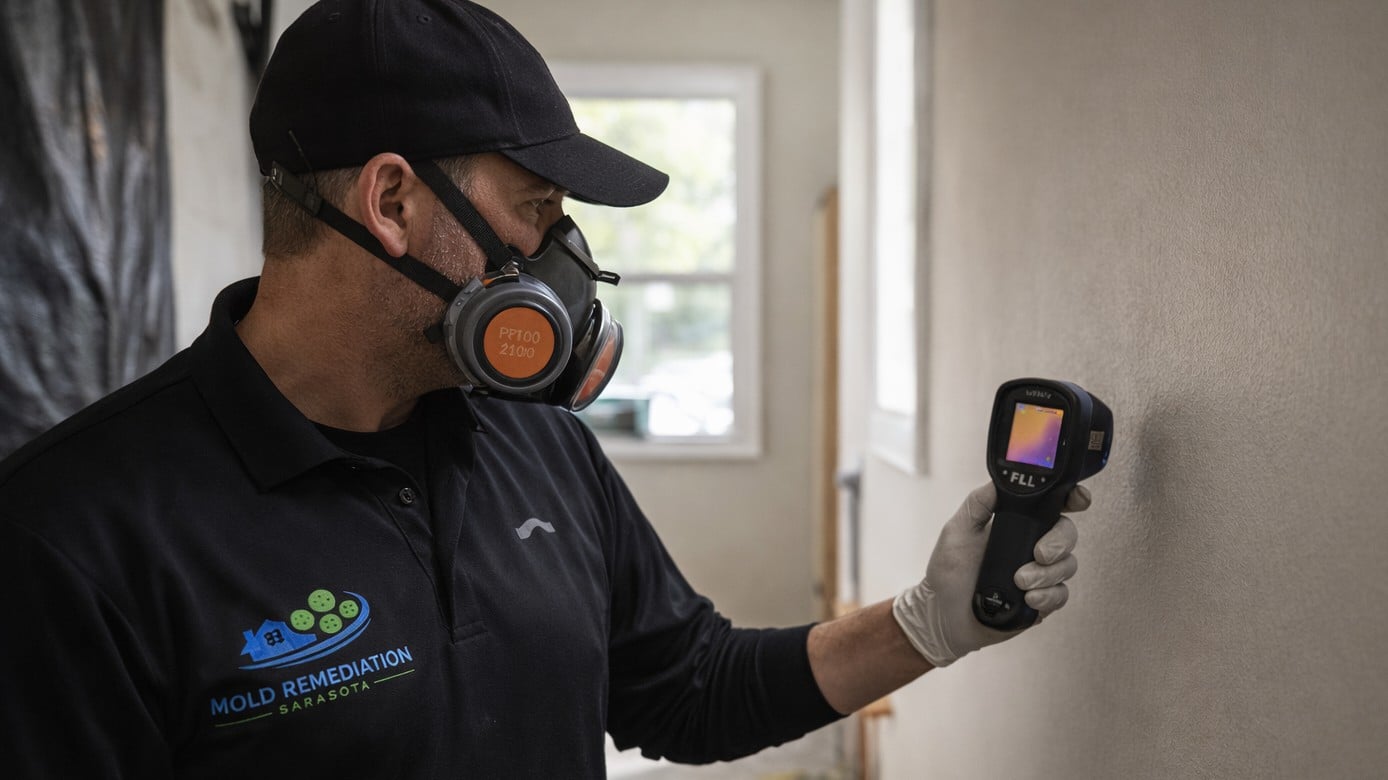
Professional inspectors rely on more than their eyes. Moisture meters measure dampness levels in building materials like drywall and wood, while hygrometers track humidity levels in the air, since high humidity creates favorable conditions for mold growth. Thermal imaging cameras add another layer of insight by detecting temperature differences that often reveal wet areas hidden behind walls or ceilings.
- Moisture meters: detect dampness inside walls, floors, and other building materials
- Hygrometers: measure humidity levels that contribute to mold-friendly environments
- Thermal imaging: reveals hidden wet spots behind surfaces without any demolition
These tools give inspectors a much clearer picture than a visual check alone, but they still stop short of identifying the specific mold species present.
What Mold Testing Adds Beyond a Look
Mold testing picks up where inspection leaves off. Instead of relying solely on observation, testing gathers physical evidence that gets analyzed in a laboratory setting, turning educated guesses into documented facts.
Air, Surface, and Bulk Sampling
Mold testing typically involves collecting samples in a few different ways. Air samples capture spores floating in indoor air, which helps assess air quality even when no visible mold is present. Surface samples are taken directly from suspected mold colonies on walls, ceilings, or other materials. Bulk samples involve removing a small piece of material, such as drywall or insulation, for deeper lab analysis.
Each sampling method serves a different purpose, and a thorough testing process often combines more than one. A layered approach to mold testing typically starts with a visual assessment, adds moisture analysis, and finishes with air and surface sample collection, giving a fuller picture than any single method could provide alone.
Lab Analysis Identifies Species and Concentration
Once samples reach the lab, technicians identify exactly which mold species are present and measure their concentration levels. This distinction matters because not all mold behaves the same way or poses the same level of concern. Identifying whether black mold, or Stachybotrys chartarum, is present versus a more common household variety can change how a remediation plan gets designed.
Results from professional mold testing typically arrive within 24 to 48 hours, delivered in a report that is easy to read and act on. This turnaround time means homeowners are not left waiting weeks for answers while a potential mold problem continues developing.
When Sarasota Homeowners Actually Need Testing
Not every mold concern requires lab testing. When mold is clearly visible, the Environmental Protection Agency and the Centers for Disease Control and Prevention generally recommend moving straight to remediation rather than spending time and money on sampling, as there are no federal limits for mold or mold spores. Testing becomes valuable in situations where visible clues are not enough to make a confident decision.
After Flooding or Water Damage
Florida’s storm season brings a real risk of flooding, and mold can begin growing within just 24 to 48 hours after a water event. Because mold can take hold this quickly, and often in places that are not immediately visible, testing after any significant water intrusion helps confirm whether spores have already started spreading through the home’s air or hidden cavities.
Musty Odors Without Visible Mold
A persistent musty smell is one of the clearest signs that mold might be growing somewhere out of sight, even when a visual inspection turns up nothing. In these cases, testing becomes the tool that can locate contamination behind walls, under flooring, or inside HVAC systems where a simple walkthrough cannot reach. Relying on smell alone without further investigation often leaves homeowners guessing rather than knowing.
Real Estate, Insurance, and Post-Remediation Checks
Testing also plays an important documentation role beyond everyday mold concerns. Common situations include:
- Buying or selling a home, where a documented mold report can influence negotiations or satisfy lender requirements
- Filing an insurance claim, where lab-verified results provide evidence to support the claim
- Confirming that a remediation project actually worked, since post-remediation testing verifies that cleanup efforts successfully reduced mold levels
Post-remediation verification offers peace of mind after a significant cleanup project, especially when a property owner needs documented confidence that the job was done right.
Why Skipping Testing Can Cost More Later
Choosing to skip testing when it is genuinely needed can turn a manageable problem into a much bigger one. Mold does not stay contained, and neither do its effects on health or property.
Air Quality and Health Risks
Mold growth can compromise indoor air quality in ways that are not always obvious until symptoms appear. Respiratory problems, allergic reactions, coughing, and skin irritation are common complaints linked to prolonged mold exposure. Without testing to confirm what is actually in the air, households dealing with unexplained symptoms may continue searching for answers while the underlying cause goes untreated.
Structural Damage and Home Value
Undetected mold does not just affect air quality; it can also weaken a building’s structural components over time. Walls, flooring, and insulation are all vulnerable to mold-related deterioration, and repairing this kind of damage tends to be far more expensive than addressing it early. A home carrying hidden mold damage can also lose resale value, since buyers and inspectors alike are wary of properties with a history of unresolved mold issues.
What Inspections and Testing Typically Cost
Cost is often the deciding factor for homeowners weighing whether to schedule an inspection, testing, or both. Mold inspection costs generally range from $300 to $400 for homes under 4,000 square feet, and between $700 and $1,000 for larger homes, according to Angi. Redfin places the national average mold inspection cost around $680, with a typical range spanning from $300 to $1,000.
Home test kits sold at hardware stores are far less reliable than professional testing. These kits typically only confirm that mold is present without identifying the species or concentration, and results can be inconclusive, leaving homeowners without the detailed information needed to plan an effective remediation strategy.
The Bottom Line for Sarasota Homeowners
Deciding between mold inspection and mold testing comes down to the specific situation at hand. Visible mold with an obvious source generally calls for straightforward remediation rather than testing, while unclear situations, health concerns, or documentation needs point toward the added value of lab-based sampling. Sarasota’s humid climate and storm exposure make both services relevant tools worth understanding on their own terms.
For homeowners trying to decide which path fits their situation, starting with a clear look at mold testing options can help clarify whether a visual inspection alone will do the job or whether lab-confirmed results are the smarter next step.
Mold Remediation Sarasota – lack Mold Testing
+1-941-401-1747
Sarasota
Sarasota
FL
34230
United States


