
Fort Collins, CO – September 25, 2026 – PRESSADVANTAGE –
Carriage Shoppe has published new consumer guidance explaining why paint blending may be considered during auto body repair and how the process can help create a consistent visual transition between repaired and adjacent vehicle panels.
The September resource focuses specifically on the refinishing stage of auto body repair. It explains how vehicle color, finish characteristics, panel position, lighting, and the relationship between repaired and neighboring surfaces can influence refinishing decisions after collision damage.
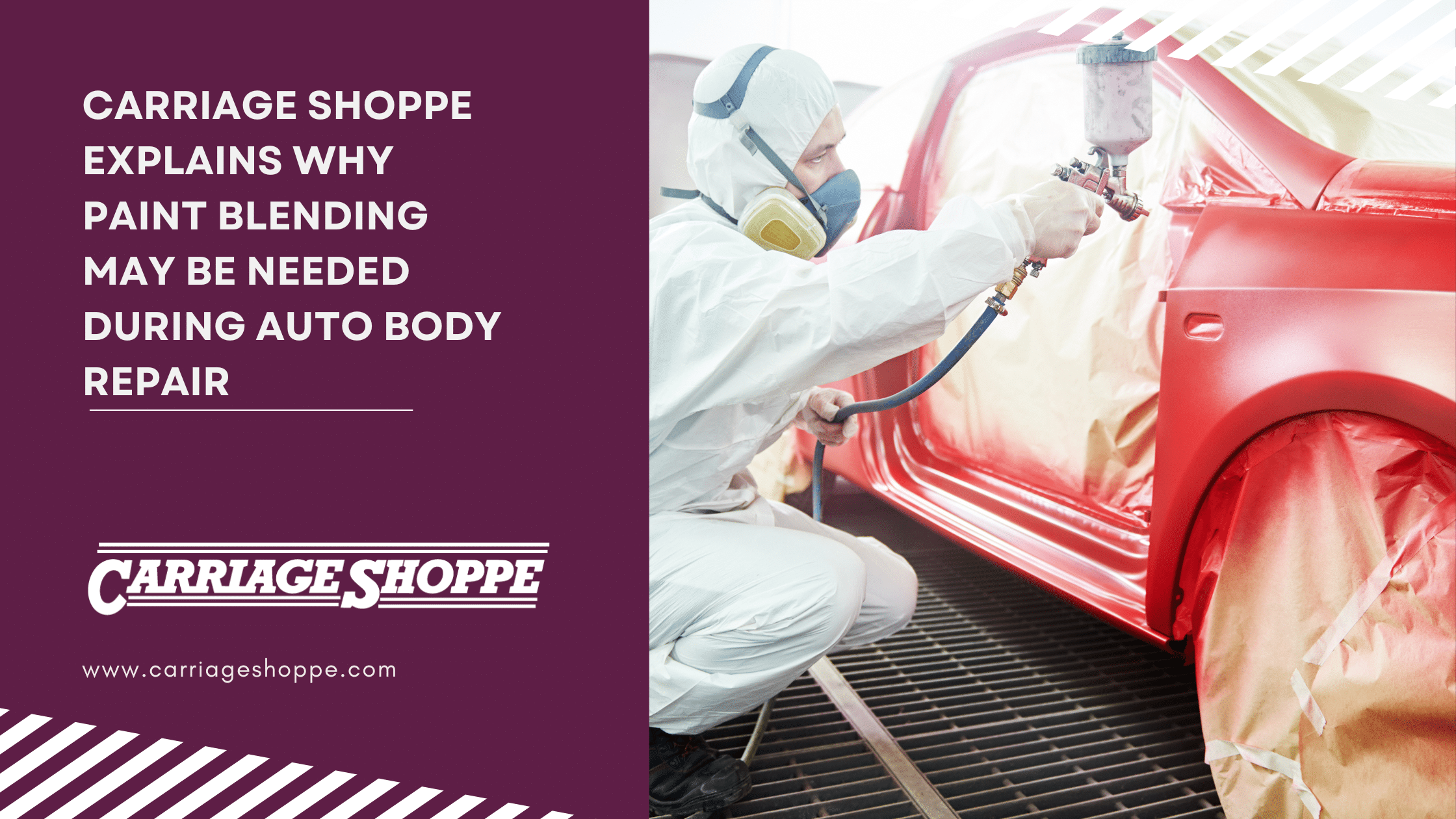
The new guidance expands on Yoder Collision Network’s existing auto body repair information by addressing a part of the repair process that may not be obvious when consumers first review collision damage.
Automotive paint can appear to be a single color, but modern finishes can contain multiple layers and visual characteristics. Depending on the vehicle, a finish may include a base color along with metallic particles, pearl effects, clear coat, or other elements that influence how the surface appears under different conditions.
Vehicle paint can also change in appearance depending on viewing angle, sunlight, shade, artificial lighting, and reflections from surrounding surfaces. These factors can make refinishing more complex than selecting a paint color based solely on its name or general appearance.
The September guidance explains that vehicle paint codes provide important starting information for identifying a finish. A paint code, however, does not necessarily account for every variable that can affect how the existing finish appears on an individual vehicle.
Manufacturing variations, the age and condition of the finish, previous refinishing, environmental exposure, and characteristics of the specific paint system can contribute to differences in appearance. For this reason, refinishing can involve evaluating the existing vehicle finish rather than relying only on a paint code.
When a collision-damaged panel requires repair or replacement, technicians can prepare the affected surface and develop a color match for the vehicle. Paint blending may then be considered as part of the refinishing plan when a gradual transition into an adjacent panel can help produce visual continuity between the repaired area and the existing finish.
Blending does not mean that every nearby panel is damaged. An adjacent panel can be included in the refinishing process specifically to support the transition of the color while remaining otherwise unaffected by the collision.
This distinction is one of the primary points of the September consumer guidance. Collision damage and refinishing operations are related, but they do not always involve the same physical boundaries. The damaged component may be limited to one panel while the refinishing process extends into an adjoining surface for color-transition purposes.
Panel position can influence whether this consideration becomes relevant. A repaired fender positioned directly beside a front door, for example, creates a visible transition between two painted surfaces. Similar relationships can exist between doors and quarter panels or among other adjacent exterior components.
A noticeable color difference can be more apparent when two panels meet directly because the surfaces can be viewed together under the same lighting. A controlled transition can help reduce the visual contrast that might otherwise occur between newly refinished material and an existing finish.
The September guidance does not characterize blending as necessary for every auto body repair. Refinishing decisions depend on the individual vehicle, affected panels, existing finish, color characteristics, repair location, and the procedures applicable to the work being performed.
Collision repair can also involve circumstances in which a damaged panel is replaced rather than repaired. A replacement component generally requires preparation and refinishing to match the vehicle, making evaluation of the surrounding finish part of planning the final appearance.
Additional information about how body repairs fit within the larger restoration process is available through Yoder Collision Network’s collision repair information.
Color evaluation is particularly relevant with finishes that contain metallic or pearl effects. The visual appearance of these finishes can be influenced not only by pigment but also by how reflective particles are distributed and how light interacts with the surface.
As a result, two painted surfaces can appear relatively close from one angle while showing a more noticeable difference from another. Refinishing decisions can account for these characteristics when technicians evaluate how the repaired area relates visually to surrounding panels.
The condition of adjacent panels can also provide important context. Existing paint may have experienced years of sunlight, weather exposure, washing, road contaminants, and normal use. The goal of repair planning is therefore to evaluate the vehicle as it exists rather than assume every surface will correspond exactly with a newly prepared paint sample.
The September resource also distinguishes paint blending from simply applying additional paint across the vehicle. Blending is a controlled refinishing technique used in relation to specific adjoining surfaces when appropriate to the repair and color match. It is not an indication that unrelated panels require body repair.
This focused explanation gives consumers additional context when refinishing operations appear on collision repair documentation. A repair plan may include work on an adjacent panel even when that panel has no documented collision damage because the operation relates to achieving a consistent transition in the vehicle’s finish.
Vehicle-specific repair information can also be relevant to refinishing work. Manufacturer procedures may address preparation, corrosion protection, coatings, component handling, or other requirements associated with repaired or replaced parts. Yoder Collision Network provides additional information about manufacturer-specific repair considerations through its OEM certification information.
The new September guidance adds a refinishing-specific explanation to Carriage Shoppe’s consumer repair information. Rather than presenting paint matching as a single color-selection step, it explains how the existing finish, repaired component, adjacent panels, and visual characteristics of the paint can be considered together.
The central takeaway is that paint blending may be used to create a gradual visual transition between newly refinished and existing painted surfaces. Whether it is appropriate depends on the individual repair, vehicle finish, affected components, and refinishing plan rather than a universal requirement applied to every collision repair.
Carriage Shoppe is part of Yoder Collision Network and provides collision and auto body repair services at 327 S Link Ln, Fort Collins, CO 80524. The facility provides body repair, refinishing, structural repair, vehicle measuring, diagnostic procedures, and other collision-related repair services.
###
For more information about Carriage Shoppe, contact the company here:
Carriage Shoppe
Micah
970 482 3597
officestaff@carriageshoppe.com
327 S Link Ln, Fort Collins, CO 80524


