JIAXING, ZHEJIANG, CHINA, October 13, 2026 /EINPresswire.com/ —
Jinrong New Materials Co., Ltd. operates in the release materials sector, supplying products for businesses that depend on controlled adhesion, efficient material handling, and reliable packaging processes. As demand grows for functional materials used in adhesive converting, flexible packaging, e-commerce logistics, and industrial manufacturing, release paper and release film continue to play an important role in production workflows. The company’s product portfolio includes Release Film and Permanent Bag Sealing Tape, two product categories that serve different but complementary needs across adhesive material handling and secure packaging applications.
The release materials market is closely connected to the wider development of pressure-sensitive adhesives, labels, tapes, protective films, and flexible packaging. Manufacturers in these sectors need materials that perform consistently during storage, processing, transportation, and final use. Release liners help protect adhesive surfaces before application, while specialized sealing tapes support the assembly and closure of packaging products. For material converters, packaging manufacturers, and wholesale distributors, selecting suitable products requires attention to specifications, compatibility, production efficiency, and dependable supply.
Jinrong New Materials Co., Ltd. participates in this market by focusing on materials used in industrial and packaging applications. Its Release Film product line addresses applications where a controlled release surface is required, while Permanent Bag Sealing Tape is relevant to packaging operations that require a secure, non-resealable closure. These products serve distinct functions, giving prospective customers opportunities to evaluate the company’s offerings according to their own production processes and commercial requirements.
Release Paper and Film in a Changing Materials Market
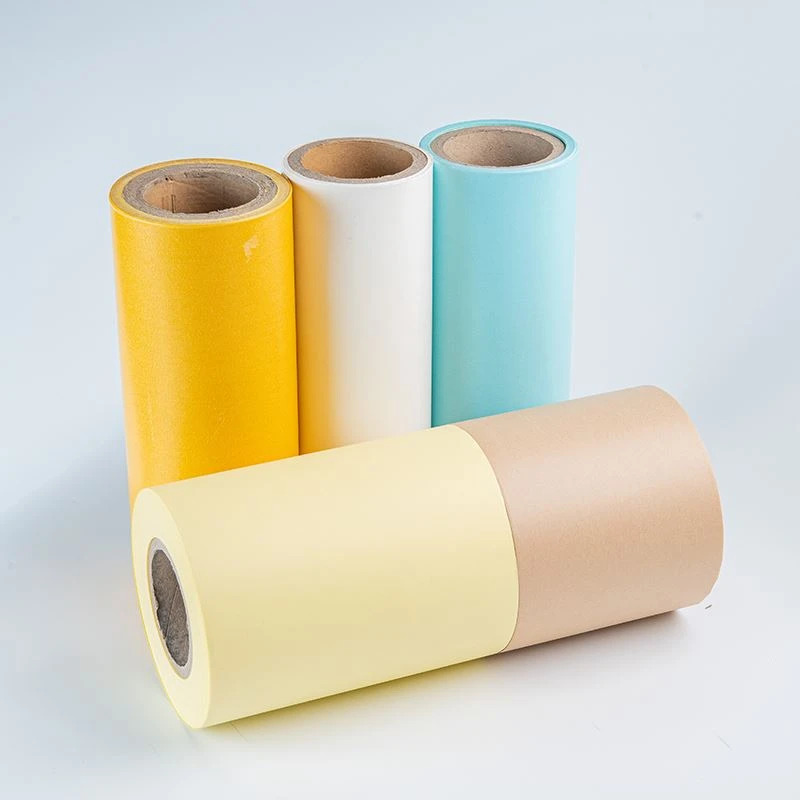
Release paper and release film are widely used as protective carriers for pressure-sensitive adhesive products. Their surfaces are designed to allow adhesive materials to separate at the appropriate stage of processing or use. Depending on the construction, a release liner may be based on paper or polymer film and may receive a surface treatment intended to control its release characteristics.
These materials are important throughout the converting industry. Adhesive tape manufacturers may use release liners to protect adhesive layers during winding, storage, and handling. Label producers may rely on release materials to support die-cutting, printing, dispensing, and application. Industrial manufacturers may use release liners in processes involving adhesive components, protective layers, or specialty materials.
The required performance varies according to the final application. Some customers prioritize clean release and consistent unwinding, while others focus on dimensional stability, surface smoothness, thickness, or compatibility with downstream converting equipment. A release liner that performs well in one process may not necessarily be suitable for another, making specification-based product selection essential.
For manufacturers and distributors, the ability to identify the right material can influence productivity and reduce production interruptions. Variations in release force, thickness, coating uniformity, or surface properties may affect processing behavior. Buyers therefore often evaluate samples and technical data before committing to larger orders.
Within this environment, Jinrong New Materials Co., Ltd. offers Release Film for customers assessing release materials for different industrial applications. The product’s suitability depends on its actual construction and technical specifications, including the base material, thickness, release treatment, and compatibility with the adhesive system. These details should be confirmed before the material is integrated into a production line.
Release Film for Industrial Processing
Release Film is used in applications where a film-based surface provides separation between adhesive or functional materials and the supporting liner. Compared with paper-based alternatives, film-based release materials may offer advantages in dimensional stability, moisture resistance, surface consistency, or suitability for particular processing environments. The specific benefits depend on the polymer, coating system, and product design.
Jinrong New Materials Co., Ltd. includes Release Film in its product portfolio, serving a market in which manufacturers increasingly require materials suited to automated processing and consistent production quality. Release film can be relevant to adhesive tapes, labels, protective materials, composite processing, and other applications where controlled separation is needed. The precise application range should be determined by the specifications of the individual product.
For buyers, one important consideration is release performance. If the liner releases too easily, the material may become difficult to handle during production or storage. If release force is too high, removing the liner may disrupt the adhesive layer or slow down the application process. A suitable balance allows the liner to remain functional during handling while separating as required during use.
Other considerations include thickness tolerance, tensile properties, surface treatment, temperature resistance, and compatibility with the adhesive formulation. For converting operations, the liner may also need to perform reliably during slitting, rewinding, die-cutting, lamination, or other processing stages. The correct specification depends on the equipment and production conditions involved.
Before placing a commercial order, customers should establish the required film width, roll length, thickness, surface characteristics, and release requirements. Testing the material under actual production conditions can help identify potential compatibility issues before large-scale use. These checks are especially useful when a release film is being introduced into an existing manufacturing process.
Permanent Bag Sealing Tape for Secure Packaging
Permanent Bag Sealing Tape serves a different function from release film. It is generally used to create a strong, one-time closure on suitable bags and mailers. Once the package is sealed, reopening it typically causes visible damage to the bag or sealing area, helping users identify interference with the package.
This type of tape is relevant to courier bags, e-commerce mailers, mailing envelopes, security packaging, and other flexible packaging formats where a permanent closure is required. As online retail and parcel delivery continue to influence packaging demand, bag manufacturers and packaging converters need sealing materials that can be integrated into their production processes and perform consistently during distribution.
Jinrong New Materials Co., Ltd. includes Permanent Bag Sealing Tape among its specified products. For customers, the suitability of a tape depends on several factors, including the bag material, surface condition, adhesive properties, tape construction, storage environment, and method of application. Compatibility should be checked with the actual packaging material rather than assumed from the tape category alone.
Permanent bag sealing tapes may use different carrier materials, adhesive systems, and release liners according to the intended application. The release liner protects the adhesive before use and is removed when the bag is ready to be sealed. The exposed adhesive then forms the final closure when pressed against the corresponding surface.
For packaging manufacturers, reliable liner removal and adhesive placement can be important to production efficiency. In automated or high-volume operations, inconsistent release or unsuitable tape dimensions may interrupt the sealing process. Buyers should therefore confirm tape width, roll length, adhesive arrangement, liner construction, and compatibility with their bag-making equipment.
Product testing can help establish whether a tape achieves the required closure on a particular bag material. Polyethylene films, coated papers, laminated structures, and other packaging surfaces can behave differently depending on their composition and surface treatment. A sample trial under normal operating conditions allows customers to evaluate adhesion, handling, and the resulting seal before moving to full production.
Serving Packaging and Converting Businesses
The customers for release materials and sealing tapes often operate within interconnected supply chains. Packaging converters transform raw materials into finished bags, labels, tapes, and other products. Distributors supply these materials to manufacturers and end users, while industrial buyers may incorporate them into specialized production processes.
For these businesses, procurement involves more than identifying a product by name. They need to determine whether the material matches their equipment, production volume, packaging requirements, and quality expectations. Consistency across batches can also matter because a change in material behavior may require adjustments to machine settings or operating procedures.
Jinrong New Materials Co., Ltd. can be evaluated by prospective customers according to these practical requirements. Buyers should request current product specifications, sample availability, packaging details, minimum order quantities, production lead times, and relevant quality documentation. Such information helps establish whether a particular product fits the intended application and commercial plan.
For export-oriented purchases, logistics and communication also play important roles. Release materials may be supplied in rolls with defined dimensions and packaging requirements. Customers need to confirm roll specifications, labeling, carton or pallet arrangements, and transportation conditions before dispatch. Clear order documentation can reduce misunderstandings and help both parties coordinate production and delivery.
The ability to respond to customer-specific requirements is another consideration in this market. Different production lines may require different widths, thicknesses, roll lengths, or release characteristics. Whether a manufacturer can accommodate these requests depends on its equipment, materials, production planning, and minimum order requirements. These details should be confirmed directly rather than assumed to be available for every product.
Quality and Product Consistency
Release materials are functional components, so their performance must be assessed in relation to the final product and manufacturing process. For Release Film, relevant checks may include thickness consistency, surface quality, release behavior, and performance during unwinding and converting. For Permanent Bag Sealing Tape, buyers may focus on dimensions, adhesive performance, liner removal, and sealing reliability on the intended packaging substrate.
A structured quality review can help customers reduce the risk of production problems. Technical data sheets define important characteristics, while sample testing helps establish whether a material behaves as expected in a specific environment. Where orders involve large quantities, buyers may also agree on inspection criteria, packaging standards, and documentation requirements before production.
Storage and handling are equally important. Adhesive materials may be affected by temperature, humidity, dust, and prolonged storage. Following the manufacturer’s handling recommendations can help maintain product condition between delivery and use. Packaging should also protect rolls from damage during transportation and warehouse storage.
For sealing tape, the final result depends on both the tape and the packaging surface. Contamination, surface additives, film composition, and environmental conditions can affect adhesion. Customers should evaluate the tape on their actual bag material and under representative operating conditions to determine whether it meets the required performance criteria.
These procedures provide a practical basis for building supplier relationships. Buyers benefit from clear specifications and consistent communication, while manufacturers benefit when customers provide accurate information about the application and performance requirements. This exchange helps both parties identify suitable products and address potential issues before they affect production.
Market Opportunities and Future Development
The release materials industry is influenced by several longer-term trends, including the expansion of e-commerce, the development of adhesive technologies, demand for efficient converting operations, and continuing changes in packaging design. As packaging manufacturers seek to improve production efficiency and product functionality, they may require release materials and sealing tapes with more specific performance characteristics.
At the same time, buyers are paying greater attention to material efficiency, waste reduction, and compatibility with evolving packaging formats. Manufacturers are therefore expected to provide reliable product information and help customers select materials suited to their actual requirements. Claims about performance or environmental benefits should be supported by the relevant technical data and certifications.
For Jinrong New Materials Co., Ltd., Release Film and Permanent Bag Sealing Tape represent two product categories within this broader market. The first supports applications that require a controlled release surface, while the second addresses permanent closure requirements for suitable flexible packaging. Their functions differ, but both illustrate how specialized materials contribute to manufacturing and packaging workflows.
The company’s market opportunities will depend on its ability to meet customer specifications, maintain product consistency, communicate clearly, and provide dependable supply arrangements. Buyers comparing suppliers should consider these factors alongside pricing, product availability, and the level of technical information provided.
As industrial and packaging businesses continue to refine their processes, suppliers that understand the practical demands of material conversion and packaging assembly can remain relevant to a range of customers. Clear product specifications, careful application testing, and effective coordination between suppliers and buyers will remain central to successful purchasing decisions.
About Jinrong New Materials Co., Ltd.
Jinrong New Materials Co., Ltd. focuses on release materials and adhesive-related products for industrial converting and packaging applications. Its product portfolio includes Release Film and Permanent Bag Sealing Tape, serving customers with different requirements for adhesive protection, material separation, and secure packaging. Related release-material categories for buyers to explore include silicone-coated release paper, glassine release paper, double-sided silicone release paper, release paper rolls, and specialized release liners for adhesive products. Depending on the confirmed product specifications, these materials may be relevant to pressure-sensitive adhesive tapes, self-adhesive labels, protective films, packaging conversion, and other manufacturing processes requiring controlled release properties. Permanent Bag Sealing Tape is designed for suitable flexible packaging applications, including mailing bags and e-commerce packaging that require a permanent closure. Customers evaluating the company’s products should confirm available material types, coating options, thicknesses, release characteristics, adhesive performance, roll dimensions, and customization requirements directly with the supplier. The company can also be contacted for product catalogs, technical specifications, sample evaluation, packaging details, and order inquiries. For more information, visit www.jinrongliner.com.
Address: 168 Rongda Road, Wanghai Street Haiyan County Jiaxing City, Zhejiang Province, China
Official Website: https://www.jinrongliner.com/
ShiMeng He
Jinrong New Materials Co., Ltd.
lynn@sanlin-tech.cn
Legal Disclaimer:
EIN Presswire provides this news content “as is” without warranty of any kind. We do not accept any responsibility or liability
for the accuracy, content, images, videos, licenses, completeness, legality, or reliability of the information contained in this
article. If you have any complaints or copyright issues related to this article, kindly contact the author above.

Media gallery